A | (ECNS) -- "Chinamaxxing," a social media buzzword describing immersion in all things Chinese, is reshaping inbound tourism as more international visitors move beyond sightseeing to embrace culture, technology and daily life. Jin Zhun, associate research fellow at the National Academy of Economic Strategy, said the rapid emergence of terms like "Chinamaxxing" reflects the growing range of experiences available in China and signals that China travel is becoming a global trend.
(Screenshot from YouTube)
According to data from the National Immigration Administration (NIA), more than 22.91 million foreign nationals entered China in the first half of 2026, up 20.4% year on year. Of these, 17.815 million entered visa-free, accounting for 77.7% of all foreign arrivals. NIA said that the top 10 source countries for inbound foreign travelers were South Korea, Russia, Malaysia, Vietnam, Thailand, Singapore, the United States, Japan, Mongolia and Australia. Inbound spending has surged. Alipay data shows tourist consumption rose 72.9% year‑on‑year since June. Shanghai customs processed 253,000 departure tax refund applications in H1, nearly triple last year, with refunded goods worth 23 billion yuan ($3.2 billion). Rather than simply checking destinations off a list, visitors are tailoring traditional outfits, picking spring tea leaves, or joining locals for early‑morning Baduanjin exercises in parks. Tech tourism is also booming: NEV factories have welcomed more than 250,000 visitors since opening to the public in 2024, while humanoid robot performances and rocket launches at Wenchang have become highlights for overseas travelers. As The Guardian observed, China is sending a clear message: Come here and judge China for yourselves. From "China Travel" to "Chinamaxxing," the evolution of these buzzwords reflects a broader shift in how foreigners perceive China. Instead of viewing the country through online content alone, more people are choosing to experience it firsthand and form their own impressions. (By Gong Weiwei) 。 日前,有网友爆料称,特斯拉专门为FSD(Full Self-Driving Supervised,监督版完全自动驾驶,以下简称FSD监督版)入华筹备的上海数据中心已“人去楼空”,相关对接团队全部撤离。8月26日,《每日经济新闻》记者向特斯拉中国方面求证,一位内部人士回应称:“不实消息。” 公开信息显示,特斯拉在中国的FSD数据合规及本土化准备仍在推进。特斯拉上海数据中心已实现境内数据全留存,位于上海临港的AI(人工智能)训练中心于2026年2月投入运营,并与百度地图合作使用合规高精地图。此前,特斯拉相关车型已通过四项汽车数据安全标准认证,为FSD进一步推进中国市场适配和数据合规奠定基础。 值得注意的是,此次“数据中心撤离”传闻或与另一则消息叠加有关。 近日,有网友发现,特斯拉北美官网更新了FSD监督版的全球可订阅地区名单。最新名单显示,目前全球仅有12个地区开放FSD监督版订阅,分别为美国、加拿大、墨西哥、波多黎各、澳大利亚、新西兰、韩国、荷兰、立陶宛、爱沙尼亚、丹麦和比利时,名单中并未出现中国。 不过,记者进一步核实发现,相关说法存在一定误读。上述名单列出的是目前可以开通FSD监督版“订阅”(Subscription)的地区,并不等同于FSD监督版可以实际使用的全部地区。由于目前中国市场尚未开通FSD监督版订阅服务,因此中国并未出现在这份名单中。
B | 图片来源:特斯拉官网 与此同时,记者在特斯拉美国官网查询发现,在FSD监督版的可使用地区列表中,中国(China)仍然位列其中。 事实上,特斯拉此前并未释放退出中国市场FSD适配工作的信号。今年2月,特斯拉全球副总裁陶琳曾表示,特斯拉会积极参与中国自动辅助驾驶领域的发展。她同时透露,虽然特斯拉尚未正式向中国用户推送“满血版FSD”,但公司一直在针对中国市场进行适配,在中国设有训练中心,并已提前部署适应中国市场的训练能力。(文章来源:每日经济新闻)。
Current article:http://www.chuandanfozhuanbenglipaicuzi.pics/news/20260826_2355392.xls


 。
。 
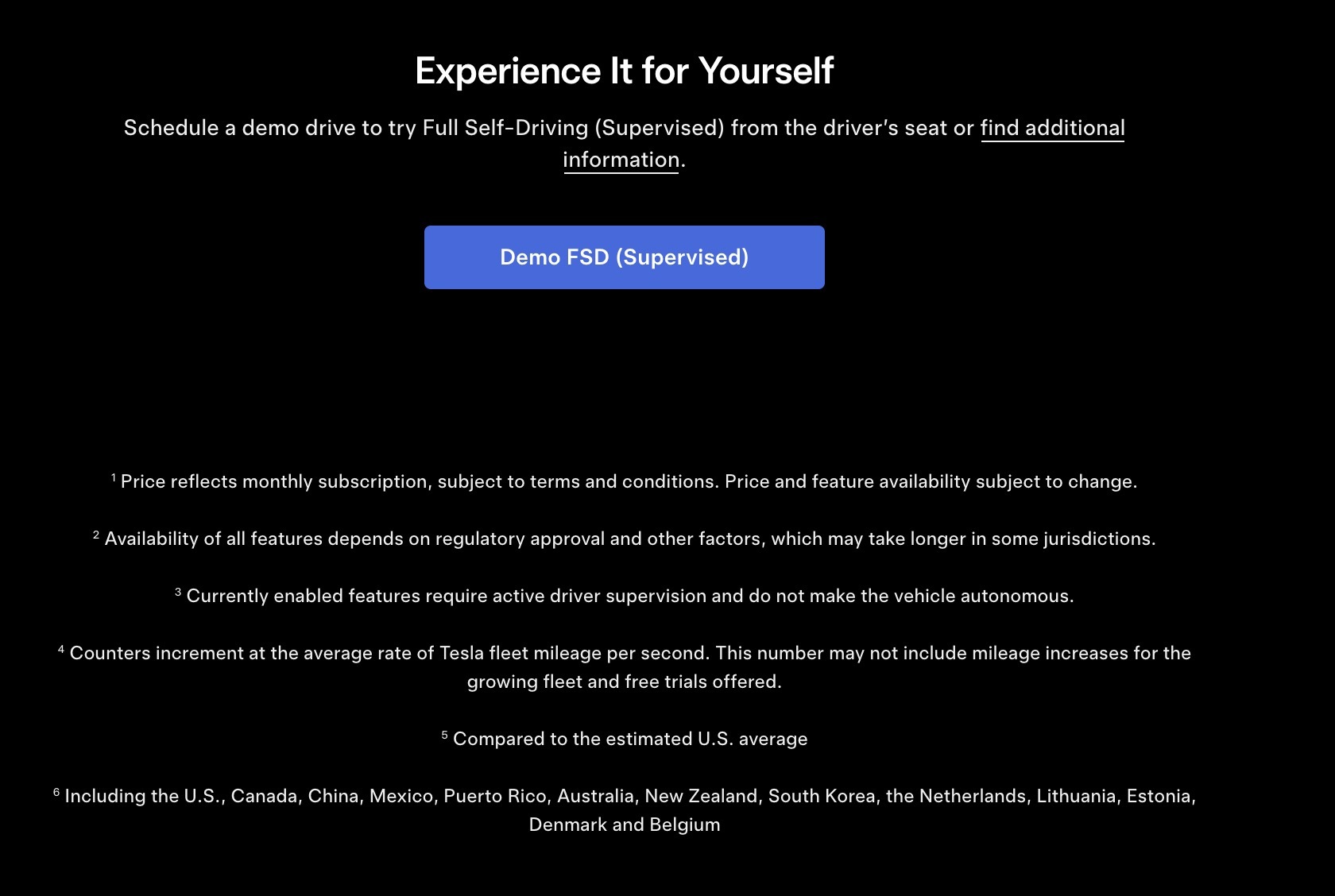 图片来源:特斯拉官网 与此同时,记者在特斯拉美国官网查询发现,在FSD监督版的可使用地区列表中,中国(China)仍然位列其中。 事实上,特斯拉此前并未释放退出中国市场FSD适配工作的信号。今年2月,特斯拉全球副总裁陶琳曾表示,特斯拉会积极参与中国自动辅助驾驶领域的发展。她同时透露,虽然特斯拉尚未正式向中国用户推送“满血版FSD”,但公司一直在针对中国市场进行适配,在中国设有训练中心,并已提前部署适应中国市场的训练能力。
 (文章来源:每日经济新闻)。
 爱上小男人
爱上小男人 一袋女王
一袋女王 龙之战
龙之战 哈尔的移动城堡
 上锁的房间
上锁的房间 银翼杀手
银翼杀手 人间正道是沧桑
 铁齿铜牙纪晓岚


